On-page SEO is everything you change on the page itself to help it rank: the content, the title, headings, links, images and code that describes the page. It is the part of SEO you fully control, which makes it the best place to start.
অন-পেজ SEO মানে পেজের ভেতরের কনটেন্ট, টাইটেল, হেডিং, লিঙ্ক ও ছবি এমনভাবে সাজানো যাতে Google ও পাঠক দুজনেই সহজে বোঝে।
1. Match the search intent first
Before writing, search your keyword on Google and look at the top results. Are they guides, product pages, lists or local businesses? That is the format Google believes searchers want. A service page will struggle to rank for a query where every result is a how-to guide, however well it is optimized.
2. Write a title tag people want to click
- Put the main topic near the start.
- Keep it roughly 50 to 60 characters so it is not cut off.
- Make it specific: 'On-Page SEO Guide: Checklist and Examples' beats 'SEO Tips'.
- Give every page a unique title.
3. Structure content with clear headings
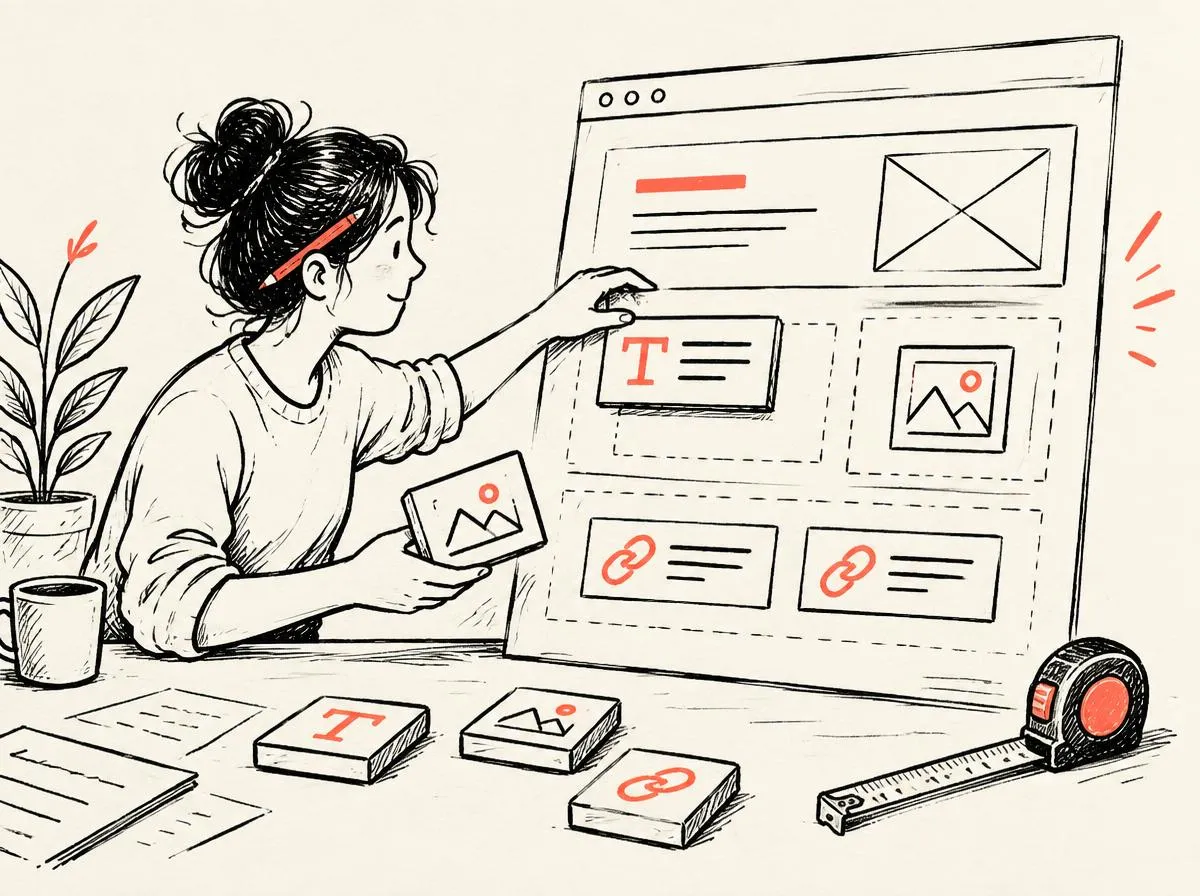
Use one H1 that states what the page is about, then H2 headings for each main section and H3 for sub-points. Headings that read like the questions people ask help readers skim and help Google and AI tools extract answers.
4. Make the content genuinely helpful
- Answer the main question early, then add detail.
- Include your own experience, examples, prices or local details that other pages lack.
- Cover related questions that searchers usually have next.
- Cut filler. Length alone does not rank; usefulness does.
- Show who wrote or reviewed the content and why they are qualified.
5. Use internal links deliberately
Link from relevant pages to the page you want to rank, using descriptive anchor text such as 'technical SEO audit' rather than 'click here'. Internal links help Google discover pages, understand their topic and see which ones matter most.
6. Optimize images
- Compress images and use modern formats such as WebP.
- Set width and height to prevent layout shifts.
- Write alt text that describes the image for someone who cannot see it.
- Use descriptive file names instead of IMG_1234.jpg.
7. Clean URLs, meta descriptions and schema
Keep URLs short and readable, such as /on-page-seo-guide. Write a meta description that summarizes the page and gives a reason to click; Google may rewrite it, but a good one is often used. Add structured data, such as Article, Product, LocalBusiness or FAQ, where it truly describes the page.
On-page SEO checklist
- 1Intent matches the top results.
- 2Unique title with the main topic near the start.
- 3One H1 and logical H2 and H3 headings.
- 4Direct answer in the first paragraph.
- 5Original information, examples or data.
- 6At least three relevant internal links in and out.
- 7Compressed images with alt text.
- 8Readable URL and meta description.
- 9Relevant schema markup.
- 10Page works well on mobile.
Frequently asked questions
What is the difference between on-page and off-page SEO?+
On-page SEO is what you change on your own pages. Off-page SEO is what happens elsewhere, such as links, mentions and reviews that signal trust.
How many times should I use my keyword?+
There is no ideal number. Use it in the title, H1 and naturally in the text, and use related words and variations instead of repeating it.
Is meta keywords tag still needed?+
No. Google has ignored the meta keywords tag for many years.
How long should a page be?+
As long as it needs to fully answer the query. Some answers need 300 words, others 2,000. Compare with what already ranks and aim to be more useful, not longer.
Need this fixed for you?
SEO Audit
Not a 90-page export. A short, readable assessment of what is wrong, what each issue costs you and what to fix first.